What You're Really Paying For When That Tomato Costs Four Dollars
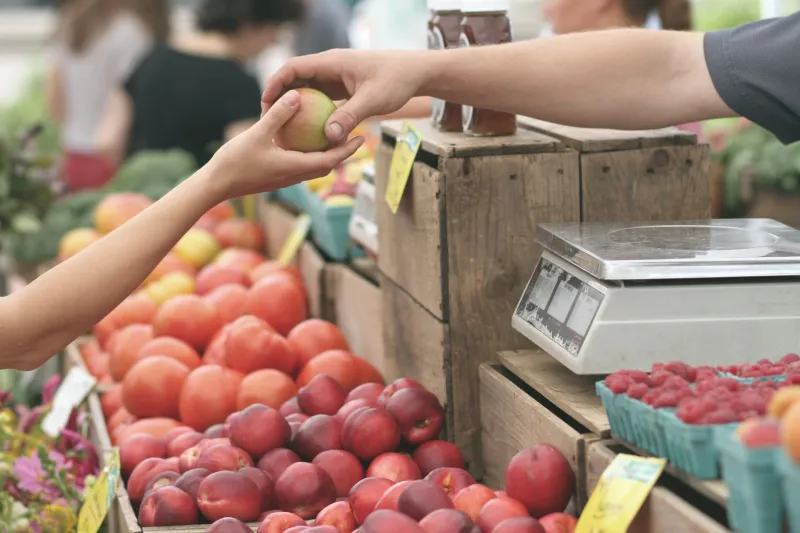
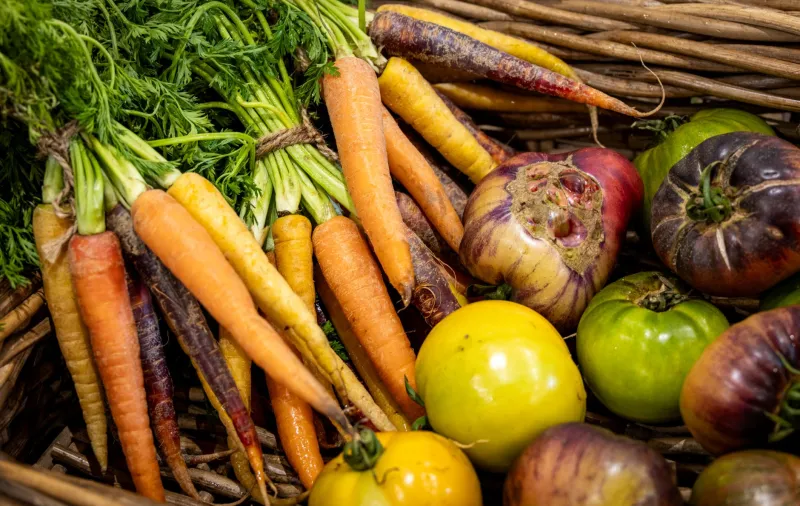
Somewhere between the parking lot and the produce table, it happens. You pick up a tomato — a real one, ugly-shouldered and sun-warmed, smelling like August — and you flip over the little handwritten tag. Four dollars a pound. Maybe five. You put it down. You pick it back up. You do the math on a BLT and wince a little.
We get it. That mental friction is real, especially when the grocery store down the road is moving hothouse tomatoes for ninety-nine cents. But here's what that price comparison is actually telling you, and it's not what most people assume.
The Ninety-Nine-Cent Tomato Isn't Cheap. It's Just Hiding Its Costs.
Industrial agriculture is extraordinarily good at one thing: making the true cost of food invisible. When a massive tomato operation in Florida or California prices its product at a dollar a pound, that number reflects a very particular set of conditions — conditions that most of us would object to if we saw them clearly.
Those conditions include wages that have historically hovered at or below poverty level for farmworkers, many of whom labor without benefits, overtime protections, or safe housing. They include synthetic fertilizer inputs derived from fossil fuels, pesticide regimens that degrade surrounding ecosystems, and soil management practices that mine the earth's fertility rather than replenish it. The cheap tomato doesn't eliminate those costs. It just moves them somewhere you can't see them — onto workers' backs, into the groundwater, and across future growing seasons when that depleted soil can no longer perform.
The farm-stand tomato, by contrast, is trying to put all of those costs back where they belong: in the price.
Let's Actually Break It Down
Small-scale farmers aren't secretive about their economics — most of them will talk your ear off about it if you ask. And what they describe is a cost structure that looks almost nothing like industrial production.
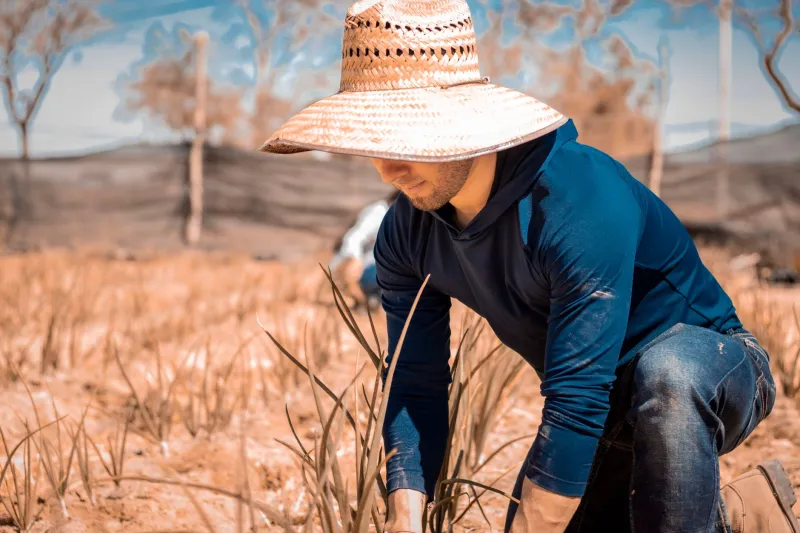
Labor is the biggest line item, and it's the one that diverges most sharply from commodity agriculture. A small diversified farm growing tomatoes, peppers, greens, and herbs can't automate the way a monoculture operation can. Harvesting is done by hand. So is transplanting, trellising, suckering, and the constant monitoring that keeps a tomato plant productive across a long season. When a farm pays workers a living wage — and increasingly, that means $18 to $22 an hour in many parts of the country — that cost flows directly into the price of the fruit.
Soil health investments are another significant factor that rarely shows up in grocery store pricing. Regenerative and organic growers spend real money on compost, cover crop seed, and biological inputs that rebuild microbial life in the soil. This isn't just idealism — healthy soil grows more nutritious food, retains water more efficiently, and sequesters carbon. But building that soil takes years and costs money up front, long before the first tomato sets fruit.
Scale matters too, and not in the way most people think. Small farms don't benefit from the purchasing power, logistics networks, or risk distribution that large operations take for granted. When a small grower buys seeds, amendments, or irrigation supplies, they're paying retail or close to it. When a drought hits or a late frost wipes out a planting, there's no corporate safety net. That vulnerability is priced into the product because it has to be.
The Hidden Subsidy You're Already Paying
Here's the part that tends to reframe the conversation pretty quickly: you're already subsidizing cheap food. Through federal farm policy, US taxpayers funnel billions of dollars annually into commodity crop programs that disproportionately benefit large agricultural operations. Corn, soybeans, wheat, cotton — these are the crops that dominate federal support, and they underpin the cheap processed food and industrial meat that make up so much of the American diet.
Small diversified farms growing vegetables, fruits, and pasture-raised animals receive a fraction of that support. They're competing in a market that's been tilted against them for decades, and they're doing it while trying to meet a higher standard of environmental and labor practice.
When you buy that four-dollar tomato, you're not paying a premium. You're paying the actual price. The ninety-nine-cent version is the one that's been artificially subsidized — you've just already paid part of that bill in April when your taxes were due.
So Where Does the Money Actually Go?
This is the question worth sitting with. When a farmer at your local market hands you a bag of tomatoes and takes your eight dollars, that money doesn't disappear into some agricultural abstraction. It goes somewhere specific and traceable.
It pays the person who showed up at 6 a.m. to harvest before the heat set in. It pays down the cost of the compost that went into the bed those tomatoes grew in. It contributes to the farmer's own income — which, for most small farms, remains modest enough that you'd probably be surprised. According to USDA data, the majority of small farm operators rely on off-farm income to make ends meet. The farm-stand margin isn't making anyone rich.
It also, in a very real sense, pays for the existence of that farm in your community. Every purchase is a vote for the continued presence of working agricultural land near where you live — land that could otherwise be developed, consolidated, or fallowed. The farm you can drive to on a Saturday morning exists because enough people decided its tomatoes were worth the price.
Eating With Your Eyes Open
None of this is an argument that food affordability isn't a real issue — it absolutely is, and the burden of expensive food falls hardest on households with the least flexibility. That's a systemic problem that demands systemic solutions: better farm subsidies, stronger regional food infrastructure, expanded SNAP benefits at farmers markets (which now exist at thousands of markets nationwide through programs like Double Up Food Bucks).
But for those of us who do have some discretionary room in our food budgets, the farm-stand tomato is worth understanding differently. Not as an indulgence or a luxury, but as an honest transaction — one where the price reflects the true cost of growing food in a way that respects the land, the workers, and the community.
That ugly, sun-warmed, four-dollar tomato? It tastes better because it is better. And now you know exactly why.