The Quiet Vanishing: What's Really Behind the Shrinking Vegetable Aisle at Your Farmers Market
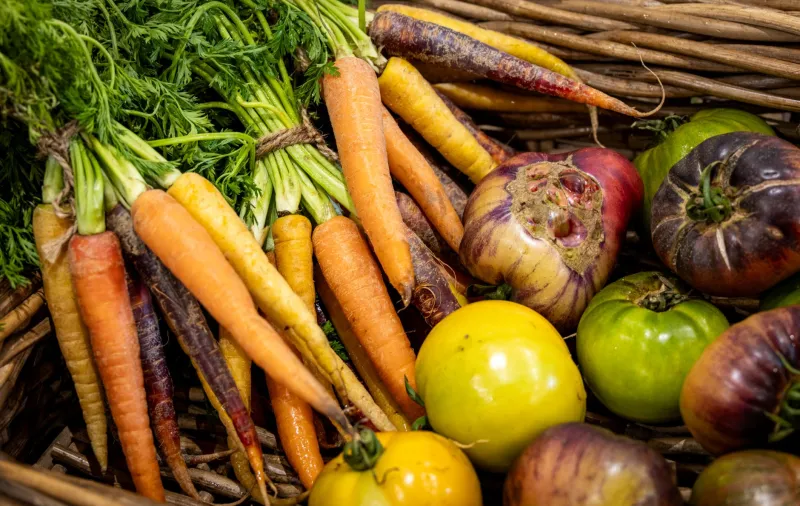
Walk your local farmers market today and you might notice something feels a little thinner than it used to — fewer tables, fewer varieties, fewer of those odd-shaped heirlooms you used to bring home just to see what they tasted like. The vendors who remain are friendly as ever, but if you ask them the right questions, something shifts behind their eyes.
What's happening to America's small vegetable farms is a slow-motion crisis that most of us are only beginning to notice. And by the time it becomes impossible to ignore, a generation of agricultural knowledge — along with the crops that carried it — may already be gone.
A Market Hollowed Out From the Inside
For decades, the farmers market was the great equalizer of American food culture. A small-acreage grower with a good eye for variety selection and a willingness to work brutal hours could carve out a viable living selling directly to local eaters. That model is cracking.
Take Delia Orosco, who has farmed a 14-acre plot outside Fresno, California for the better part of two decades. She used to grow 40 or more vegetable varieties each season — Chioggia beets, Dragon Tongue beans, six kinds of summer squash. Today, she's down to about 18. "I didn't make that choice because I wanted to," she says. "I made it because I couldn't afford not to."
The economics are brutal and they're getting worse. Labor costs have climbed sharply across most growing regions. Inputs — seeds, soil amendments, irrigation supplies — have followed inflation up and then some. Meanwhile, the prices many small farmers can realistically charge at market have barely moved. Customers who were enthusiastic about paying a premium for local, diverse produce a few years ago are now quietly reaching for the cheaper option. Who can blame them? But the math doesn't work for the farmer.
The crops that fall off the list first are almost always the ones that take the most hand labor and deliver the thinnest margins — which, not coincidentally, tend to be the most nutritionally interesting, the most regionally distinctive, and the hardest to find anywhere else.
Consolidation's Long Shadow
Small vegetable farms don't disappear in dramatic fashion. There's no bankruptcy headline, no factory closing. A farmer decides not to plant a crop this year. Then next year. Then they lease out a field to a neighbor running a commodity operation. Then they retire and nobody takes over the lease.
Across the country, that quiet attrition is adding up to something significant. According to USDA data, the number of small vegetable farms — those grossing under $100,000 annually — has declined steadily over the past two decades. Meanwhile, production has concentrated among larger operations that can absorb costs through scale but have little incentive to maintain variety diversity.
When a 500-acre operation decides which tomato to grow, they're choosing based on yield, shelf life, and shipping durability. They're not choosing based on flavor complexity or regional food heritage. That's not a moral failing — it's just arithmetic. But the cumulative effect is a narrowing of what's actually available, even at places that are supposed to celebrate abundance.
Market consolidation hits differently in different regions, but no corner of the country is immune. In the Midwest, aging farmer demographics and the relentless economic pull of row crops have gutted the vegetable farming infrastructure that once supported regional foodsheds. In the Southeast, labor shortages — driven partly by immigration enforcement and partly by a generational shift away from farm work — have made hand-harvested specialty crops increasingly difficult to sustain. In New England, land prices have pushed younger farmers out before they could ever establish roots.
The Varieties Nobody's Growing Anymore
Here's where it gets personal. Every region of this country developed, over generations, a portfolio of vegetable varieties that were specifically adapted to local soils, climates, and food traditions. Those varieties weren't just culturally interesting — they were often nutritionally superior, more pest-resistant, and better suited to low-input growing than the commercial hybrids that replaced them.
When a farmer stops growing a variety, it doesn't necessarily disappear overnight. Seed banks and preservation networks like the Seed Savers Exchange work hard to hold the genetic line. But a variety that isn't being grown, eaten, and selected by working farmers is a variety that's slowly losing its connection to the living agricultural system it evolved within. It becomes a specimen rather than a crop.
Jordan Whitfield farms about 22 acres in central Vermont, and he's been keeping a mental list of what he's had to let go. "I used to grow Mortgage Lifter tomatoes, four or five kinds of dry beans, this incredible storage onion my neighbor's grandmother brought over from Portugal," he says. "Those are gone now. Not because nobody wanted them. Because I couldn't find the labor to harvest them and still pay my bills."
The irony is that some of these crops — dense, dry-farmed, low-water varieties especially — are exactly what a changing climate calls for. We're abandoning agricultural diversity at the precise moment we need it most.
Fighting to Stay Diverse
Not everyone is giving up. Across the country, a stubborn cohort of growers is finding creative ways to maintain diversity while keeping the lights on.
Some are leaning into CSA models with longer commitments and higher upfront payments that let them plan more ambitiously. Others are partnering with restaurants whose chefs actively want unusual varieties and will pay accordingly. A growing number are collaborating with regional seed companies to grow out heritage varieties as part of formal preservation contracts — getting paid to farm the old stuff, essentially.
Community-supported agriculture with sliding-scale pricing is helping some operations hold onto lower-income customers without gutting their revenue. Others are hosting farm dinners and educational events that build the kind of deep community investment that makes customers think twice before switching to the cheaper option.
These approaches work. But they require significant time, energy, and business sophistication on top of an already crushing workload. Not every farmer can pull it off. Not every farmer should have to.
What We Owe the People Growing Our Food
The disappearance of vegetable diversity from local farms isn't just a food issue. It's a labor issue, a land issue, an immigration policy issue, and a question of what we actually value as a culture when we're forced to put our money where our mouths are.
If we want diverse, nutritious, locally adapted vegetables to exist — and most of us say we do — then the system that produces them has to be financially viable for the people doing the growing. That means paying prices that reflect real costs. It means advocating for farm labor policies that don't leave growers without a workforce at harvest time. It means supporting land access programs that let new farmers get established before they're priced out.
And it means showing up. At the market, at the CSA pickup, at the farm stand on the edge of town. Because the invisible crop isn't gone yet. But it's getting harder to find every season, and the window to change that is narrower than most of us realize.