Pouring It Straight: Inside the Dairy Co-op Rebuilding What Big Ag Broke
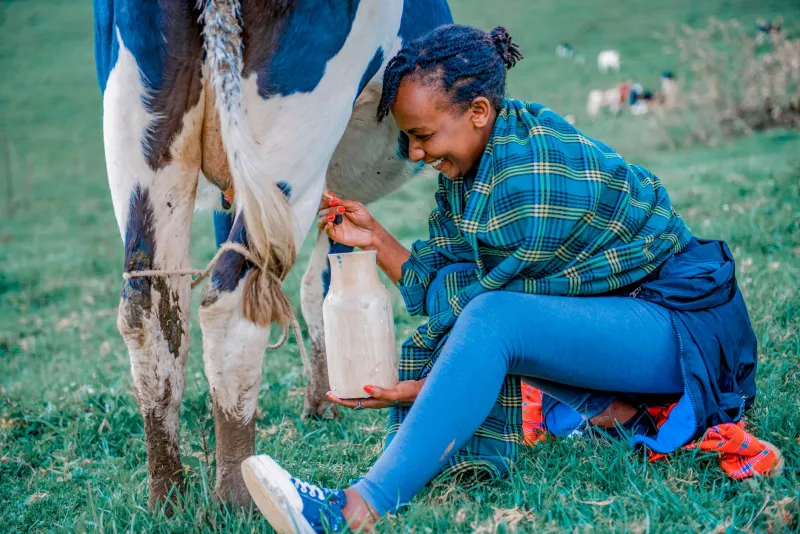
Somewhere between the factory farm exposés, the rBST controversies, and the slow creep of ultra-processed "dairy alternatives," a lot of American consumers just... stopped trusting milk. And honestly? Who could blame them.
For years, the industrial dairy complex operated like a black box. Milk came from somewhere, got pooled with milk from thousands of other cows across multiple states, got processed and homogenized and fortified, and landed in a jug on a supermarket shelf with almost zero information about where it actually started. The people buying it had no idea whether it came from a pasture-raised herd in Vermont or a 10,000-head confinement operation in California.
That opacity — that fundamental disconnect between consumer and source — is exactly what a new generation of regional dairy co-ops is working to dismantle.
When Farmers Stop Competing and Start Cooperating
Take Millbrook Valley Creamery Collective, a co-op operating out of the mid-Atlantic region that launched six years ago with seven member farms and a shared conviction that small-scale dairy could survive — if the farmers stopped going it alone.
"We were all hemorrhaging money trying to sell to the same processors who kept dropping our prices," says co-op founding member Deb Harrington, who runs a 40-head Jersey herd with her husband outside of Frederick, Maryland. "At some point you either quit, sell to a conglomerate, or you get creative."
They got creative.
The collective pooled resources to invest in shared processing and bottling equipment, established a common quality standard across all member farms, and launched a direct-to-consumer delivery model that now serves several thousand households across three states. Every bottle carries a QR code that links to the specific farm — or farms — where the milk originated, along with information about the animals' diet, pasture access, and any treatments administered.
It sounds simple. In practice, it required years of negotiation, a lot of compromise, and a shared willingness to be radically transparent in an industry that had long rewarded opacity.
The Trust Deficit Is Real — and So Is the Appetite to Fix It
Consumer skepticism about dairy isn't just vibes. It's rooted in a decades-long series of industry practices that prioritized volume and shelf life over animal welfare, nutritional integrity, and honest labeling. The rBST growth hormone debate. The "organic" label that turned out to mean very different things depending on who was certifying. The mega-dairies that technically qualified as "family farms" because of a technicality in the definition.
People noticed. And many of them walked away from conventional dairy entirely.
Nutritionist and food systems educator Tamara Osei, who works with community health programs in the Baltimore area, has watched this shift up close. "What I see with my clients is a genuine desire to eat animal products again — including dairy — but only if they can verify the conditions," she says. "The demand for transparency isn't a niche thing anymore. It's mainstream."
Osei now recommends Millbrook Valley's products to clients who want to reintroduce dairy, partly because of the nutritional profile — grass-fed Jersey milk tends to have higher levels of omega-3s and conjugated linoleic acid compared to commodity milk — and partly because of the accountability built into the supply chain.
"When a patient can scan a code and see that the milk came from a 38-cow herd in Washington County that's been on pasture since April, that means something. It reduces the anxiety around food in a way that a generic label just can't."
Small Batch, Real Costs
Here's the part nobody loves talking about: milk from a transparent, small-scale co-op costs more. Sometimes significantly more. A half-gallon from Millbrook Valley runs about $5.50 to $6.50 depending on the retailer, compared to $3 to $4 for a conventional store-brand jug.
The co-op doesn't apologize for it.
"Our price reflects what it actually costs to raise animals well, pay farmers a living wage, and run a processing operation that isn't cutting corners," says collective operations manager Jim Tattersall. "The cheap milk at the supermarket is cheap because someone, somewhere — usually the farmer and usually the animal — is absorbing that cost."
The economics of small-batch dairy are genuinely challenging. The collective operates on thin margins and has had to be disciplined about growth, turning down wholesale accounts that would require them to scale faster than their member farms can responsibly manage. They've prioritized CSA-style subscription models and farmers market relationships over broad retail distribution, which keeps overhead lower and customer relationships tighter.
It's not a get-rich-quick model. But for Deb Harrington, it's the first time in fifteen years of farming that she's felt like the operation has a real future.
"I'm not getting wealthy. But I'm not losing money anymore. And I know every person buying our milk. Some of them have been out to meet the cows. That's not nothing."
The Customers Who Came Back
Amanda Forsythe, a mother of three from suburban Annapolis, hadn't bought cow's milk for nearly four years before a neighbor mentioned the collective's delivery service. She'd switched her family to oat milk after reading a series of investigative pieces about confinement dairy practices.
"I didn't want to support that system," she says. "But I also missed the real thing. My kids missed it. There's something about actual dairy that the alternatives just don't replicate."
She signed up for a weekly subscription, scanned the QR code on her first delivery, and spent twenty minutes reading about the Harrington farm — the pasture rotation schedule, the fact that the calves stay with their mothers longer than industry standard, the absence of routine antibiotic use.
"I cried a little, honestly. I know that sounds dramatic. But it felt like food was allowed to be real again."
Stories like Amanda's are becoming more common as the collective's membership grows. And they point to something bigger than one co-op's success: a fundamental consumer hunger for accountability in a food system that spent decades training people not to ask questions.
What This Model Gets Right
The Millbrook Valley model isn't perfect, and the co-op's leadership is the first to admit it. Scaling equitably while maintaining quality is hard. Making truly affordable pricing work against the subsidized economics of industrial dairy is harder. And reaching consumers who can't afford the premium — the people who arguably most deserve access to high-quality, honestly produced food — remains an ongoing challenge the collective is actively wrestling with.
But what the model gets right is the thing that matters most right now: it treats trust as infrastructure.
In a moment when faith in food institutions is genuinely fragile, the act of showing your work — of saying here are the farms, here are the animals, here is exactly what went into this bottle — is not just good marketing. It's a form of civic honesty that the food system has been starved of for a long time.
The milk route, as the co-op farmers call their delivery runs, is short. Deliberately, stubbornly short. From pasture to porch in under 48 hours, with every stop accounted for.
That's the whole point.