What Small Farmers Know About Meat Prices That Your Grocery Store Never Will
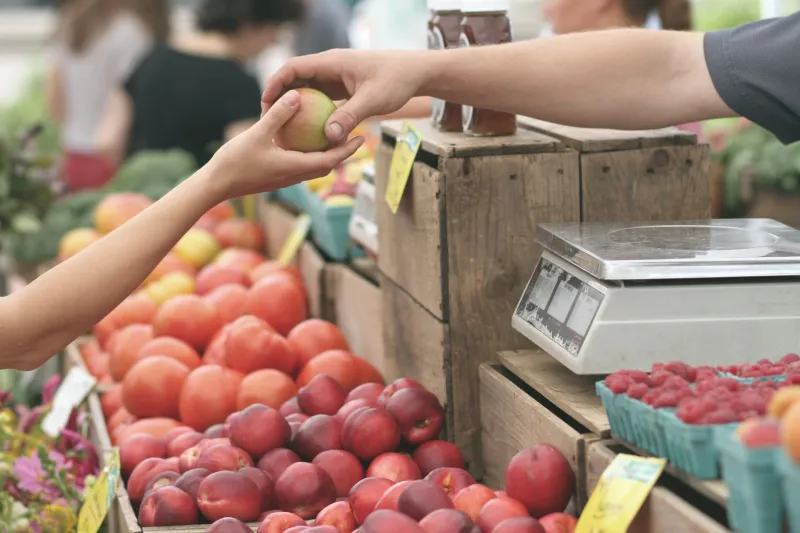
Somewhere between the parking lot of a farmers market and the checkout line at a big-box grocery store, a lot of people do the math and decide the farm stand is ripping them off. Twelve dollars a pound for ground beef when the supermarket charges four? Must be a markup for the rustic aesthetic, the hand-lettered signs, the story.
Here's the thing: the story is exactly what you're not paying enough for.
Talk to almost any small-scale livestock farmer long enough and they'll eventually say some version of the same thing — that they've looked at their books at the end of a brutal year and realized they paid themselves somewhere around three dollars an hour. Not because they're bad at business. Because the actual cost of raising animals with care, on pasture, with transparency and integrity, is genuinely staggering — and most of them are quietly absorbing that gap rather than passing it on to you.
The Ground Beneath the Price Tag
Let's start where everything starts: the land.
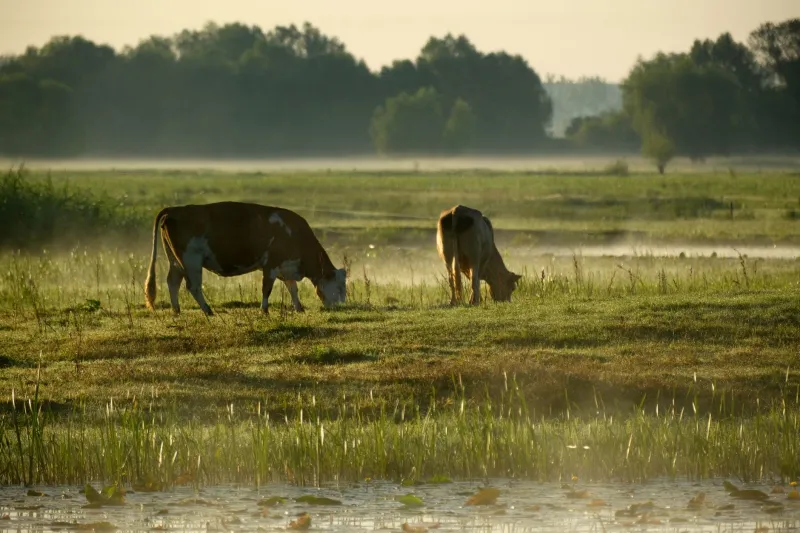
Rotational grazing — moving animals through a series of paddocks to mimic the way ruminants naturally graze — is one of the most ecologically sound practices in livestock farming. It builds soil health, sequesters carbon, reduces parasite loads, and produces animals that are demonstrably healthier and more nutritious. It is also relentlessly labor-intensive.
Every few days, sometimes every day, fencing has to move. Water lines get repositioned. Animals get checked, counted, assessed. A farmer running a few hundred acres of pasture might spend more hours managing rotational grazing logistics than a factory operation spends on the entire care of thousands of animals — because that factory operation has automated away most of what we'd recognize as actual animal husbandry.
Sarah Whitmore, who raises grass-fed beef and pastured pork on 280 acres in central Virginia, puts it plainly: "People ask me why I charge what I charge, and I want to hand them my time logs for a week. Just one week. Moving pigs is not a two-person job — it's a four-person job that I'm doing with two people. Every single time."
The Vet Bill Nobody Talks About
Pasture-raised doesn't mean problem-free. In fact, animals with access to the outdoors face a whole category of health challenges that confinement operations have largely engineered out of existence — through antibiotics, concrete floors, and a total elimination of the natural environment.
Parasites are a constant battle, particularly in humid climates. Predator pressure — coyotes, foxes, birds of prey — requires either significant infrastructure investment or the kind of vigilant, daily presence that doesn't leave much room for a life outside the farm. Injuries happen. Difficult births happen. And unlike the industrial system, where a sick animal is a financial write-off absorbed across thousands of others, a small farmer losing one animal can mean losing a month's margin.
Veterinary care on small farms is also structurally more expensive per animal. Large operations negotiate bulk contracts. Small farms pay retail, often for emergency farm calls that run several hundred dollars before the vet has even opened their bag.
Marcos Delgado, who runs a mixed livestock operation outside of Albuquerque raising heritage-breed Churro sheep and Mangalitsa hogs, lost four animals to a single predator event last fall. "That was about $2,800 in a night," he says. "I don't have a line item for that. Nobody does. You just eat it and keep going."
The Processing Bottleneck Is Real and It's Brutal
Here's the part of the small farm meat economy that almost never makes it into the conversation at the market booth: getting an animal from pasture to package is its own financial maze.
USDA-inspected processing — required for legal retail sale — is performed at facilities that are vanishingly scarce in most rural areas. The consolidation of the meatpacking industry over the past few decades didn't just hurt farmers; it gutted the regional infrastructure that small producers depend on. Today, many small livestock farmers are driving two, three, sometimes four hours each way to reach an inspected facility. They're booking slots six months to a year in advance. They're paying processing fees that have climbed steadily as demand from the local food movement has outpaced capacity.
Processing a single hog might run $300 to $500 depending on region and cut specifications. A beef animal can easily top $700 to $900. That cost gets folded into the price per pound, invisibly, and when a customer balks at the number on the label, the farmer has no easy way to walk them through the full accounting without sounding defensive.
"I've started just telling people what my processing wait time is," says Whitmore. "When I say I booked this animal's processing slot before it was even born, something clicks for them."
The Feed Math, Even on Grass
Grass-fed and pasture-raised operations aren't entirely off the feed bill hook. Winters require hay. Drought years require hay. Animals being finished for market or supporting a nursing litter often need supplemental feed. Certified organic grain — for those farms carrying that additional certification — runs significantly higher than conventional.
And then there's the time to finish. A pastured pig takes longer to reach market weight than a confinement-raised one. A grass-finished steer takes anywhere from 24 to 30 months compared to the 14 to 18 months typical in feedlot operations. More time means more feed, more labor, more land tied up, more risk of something going wrong before the animal ever reaches the cooler.
The industrial system optimized for speed above everything else. Small farms optimized for something different — flavor, animal welfare, ecological health — and the economics of that choice are baked into every pound.
So Why Isn't the Price Higher?
This is the question that keeps some agricultural economists up at night. Given the actual cost inputs — land, labor, veterinary care, processing, extended finishing times, infrastructure, and the basic human cost of doing this work with integrity — the prices at most small farm stands are, by any honest accounting, too low.
Farmers hold prices down because they know their customers have a ceiling. They hold prices down because they're competing, psychologically if not practically, against a grocery store price that is itself artificially low — subsidized by industrial agriculture's ability to externalize costs onto land, water, animal welfare, and the health of rural communities.
Delgado says he's done the math multiple times and arrived at the same uncomfortable answer. "If I charged what this actually costs me to produce, I'd lose half my customers. So I charge less than it costs, I pay myself less than minimum wage, and I tell myself it's worth it because I believe in what I'm doing. But that's not a business model. That's just love with a liability."
What You're Actually Buying
When you hand over that $18 for a pound of ground beef at your local farm stand, you're not paying a premium for aesthetics or nostalgia. You're participating — however partially — in covering the real cost of food raised by people who are doing it the hard way because they believe it matters.
You're paying for the labor of moving fencing in July heat. For the vet call at 11 p.m. For the six-hour round trip to the only inspected processor in the region. For the two extra years a steer spent on grass instead of in a feedlot. For the farmer who looked at their books last December and decided to do it again anyway.
The actual lottery here isn't the price — it's that farmers like these still exist at all. And whether they keep existing might have more to do with your shopping choices than any farm bill Congress has ever passed.