Same Fruit, Totally Different Berry: The Seasonal Secret Behind Your Strawberry's Flavor
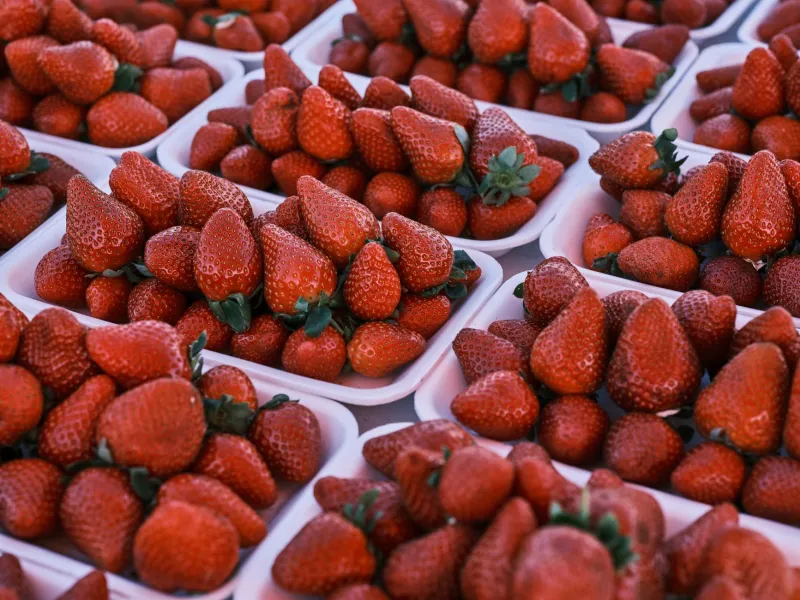
You bit into one last month and it stopped you cold. Sweet, floral, almost wine-dark in its intensity — the kind of strawberry that makes you question every grocery store berry you've ever eaten. Then you went back to the same stand, grabbed another pint, and got something entirely different. Brighter, yes. Juicy, sure. But that depth? Gone.
Same farm. Same farmer. Same little green cardboard carton. Completely different experience.
This isn't a fluke, and it's not the farm's fault. What you're tasting is one of the most underappreciated realities of seasonal eating: strawberries are not a single, static thing. They're a moving target — shifting with the calendar, the weather, and the calculated decisions farmers make about which varieties to plant, when to harvest them, and how to get them to you before they fall apart.
Once you understand what's actually going on, you'll never look at a strawberry the same way again.
The Variety Rotation You Never Knew Existed
Here's something most consumers don't realize: the strawberry season at a single farm is often actually multiple seasons layered on top of each other, each anchored by a different variety with its own flavor personality.
Early-season varieties like Earliglow or Honeoye are bred to wake up fast and fruit aggressively before summer heat sets in. They tend to be smaller, more intensely flavored, and almost jammy — a concentrated burst that comes from the cool soil and slow sugar development of late spring. Then come the mid-season workhorses: Chandler, Jewel, Allstar. These are the big, gorgeous berries that photograph well and hold up in transport. They're crowd-pleasers, but their flavor is broader, less pointed.
Late-season varieties? They're a different animal entirely. Some farmers swear by everbearing types like Seascape or Albion for their extended harvest window, but the tradeoff is a flavor profile that's softer around the edges — more water content, less of that electric sweetness that defines the peak-of-spring berry.
"People ask me why their favorite berry isn't there anymore," says one small-scale grower in the Mid-Atlantic region who runs a CSA alongside her farmers market booth. "I have to explain that we moved into the next variety. The Earliglow is done. That flavor is just gone until next May."
For her, this is just the rhythm of the farm. For her customers, it can feel like a betrayal.
Ripeness Is Everything — And It's Complicated
Then there's the harvest timing question, which turns out to be far more nuanced than "pick it when it's red."
Strawberries don't ripen evenly. They ripen in flushes, and within a single plant, berries at different stages of development can exist simultaneously. The decision of when to pick — and which berries to prioritize — shapes the flavor of everything that ends up in your pint.
A berry harvested at 90% ripeness will taste measurably different from one picked at full blush. The sugars haven't fully converted. The aromatic compounds, the esters and aldehydes that give a strawberry its characteristic floral punch, haven't had time to fully develop. You get something that looks right but tastes flat.
Farmers who sell direct — at markets, through CSAs, at farm stands — have a significant advantage here. They can afford to wait. They're not shipping to a distribution center three states away. They're driving a truck to a parking lot on Saturday morning. That extra day or two on the vine is the difference between a good berry and an unforgettable one.
Contrast that with large commercial operations, where strawberries are often harvested firm and early to survive the logistics chain intact. By the time they reach the grocery store, they've been in refrigerated transit long enough that the cold has done real damage to their cellular structure — and to their flavor.
What Cold Storage Actually Does to a Berry
This is where things get a little science-y, but stick with it because it matters.
Strawberries are metabolically active after harvest. They're still breathing, still converting compounds, still doing biochemical work. Cold temperatures slow that process down, which is great for shelf life and genuinely terrible for flavor development. Enzymes that would otherwise keep building aromatic complexity get sluggish. The berry holds its shape but loses its soul.
There's also a texture dimension to this. A strawberry that's been sitting in a 34-degree warehouse for four days will have a subtly mealy quality that a fresh-picked berry simply doesn't. The cell walls degrade differently. The juice doesn't burst the same way when you bite down.
Local farmers who sell within 24 to 48 hours of harvest sidestep most of this. But even they have to make tradeoffs. A hot, humid week in June can push a grower to harvest slightly earlier than ideal, just to avoid losing the whole crop to mold. A drought year concentrates sugars in ways that make berries taste almost shockingly intense — but smaller. A rainy stretch dilutes everything.
The berry in your hand is a record of decisions made in response to conditions that were never fully in anyone's control.
Learning to Taste the Difference
So what do you actually do with all of this?
First: stop expecting consistency. The moment you release that expectation, seasonal eating gets a whole lot more interesting. Instead of being disappointed that this week's strawberry isn't last week's strawberry, you start treating each pint as its own thing — worth tasting on its own terms.
Second: ask questions at the market. Most farmers who grow multiple varieties are genuinely excited to talk about them. Ask what variety you're holding. Ask when it was picked. Ask what's coming next and how the flavor will shift. You'll learn more in five minutes than you would in an hour of reading.
Third: eat them fast. Local strawberries are not built for your refrigerator. They're built for your mouth, today, ideally while standing over the sink. If you absolutely have to store them, keep them at room temperature for a day rather than chilling them immediately — you'll preserve more of the volatile aromatic compounds that make them worth eating in the first place.
And finally: pay attention. Taste a berry from the early-season flush. Taste one in midsummer. Notice what changes — the sweetness, the acidity, the perfume, the texture. You're not just eating fruit. You're reading a calendar written in flavor.
The Bigger Picture
There's something quietly radical about learning to taste seasonally. It pushes back against the food system's relentless promise of sameness — the idea that a strawberry should taste like a strawberry, period, regardless of when or where or how it was grown.
Local farms can't make that promise. They're not trying to. What they're offering instead is something more honest and, once you get used to it, far more satisfying: a fruit that tastes like right now, like this farm, like this particular stretch of spring before it slips away.
That berry that stopped you cold last month? It was a moment. A specific convergence of variety, weather, soil, and timing that won't repeat itself exactly until next year — if then.
That's not a flaw in the system. That's the whole point.