What Keeps the Winter Market Running? A Cold Room You've Never Thought About
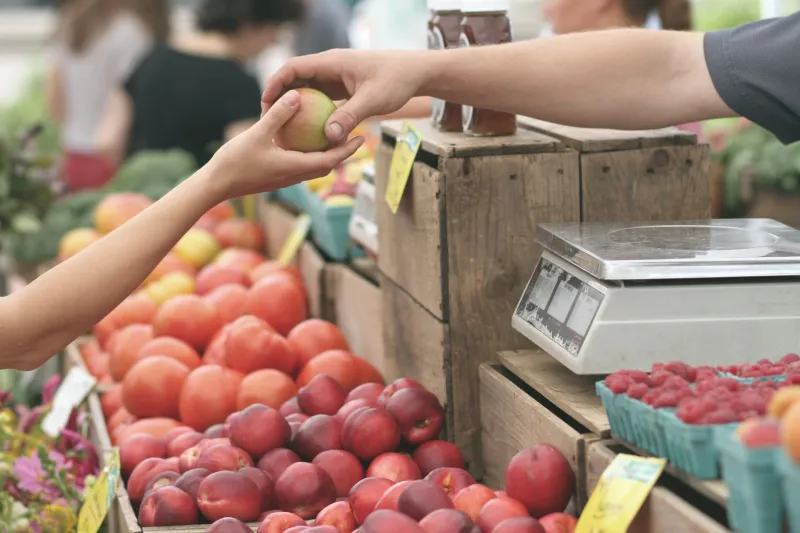
You show up on a Saturday morning in January, breath fogging in the cold air, and there it is — a farmers market table loaded with butternut squash, cured meats, hard cider, and wheels of cheese. It feels almost miraculous. And honestly? It kind of is.
But the miracle didn't happen at the farm. It happened months earlier, in a refrigerated room you've probably never seen, run by people you've probably never heard of, through a logistical arrangement most consumers never think to ask about.
Shared cold storage — cooperative or commercially rented refrigeration facilities used by multiple small farms — is one of the most critical and least celebrated pillars of the local food economy. Without it, the winter farmers market as we know it simply wouldn't exist.
The Problem With Being Small
Here's the thing about refrigeration: it's expensive to build, expensive to run, and sized for volume. A large industrial operation can justify a walk-in cooler the size of a barn because it's processing thousands of units a day. A small diversified farm growing thirty varieties of vegetables for a regional market? The math doesn't work the same way.
"We looked into putting in our own cold storage when we first started scaling up," says one vegetable farmer in the upper Midwest who asked to remain anonymous because she didn't want to seem like she was complaining. "The quotes we got were just — they were not realistic for where we were. You're talking about a serious capital investment before you've even sold a single carrot out of the thing."
This is the infrastructure gap that quietly strangles small farm growth across the country. You can grow the food. You can find the customers. But if you can't keep the food at the right temperature between harvest and sale, none of the rest of it matters.
Shared cold storage facilities — whether run by farm cooperatives, regional food hubs, or small private operators who lease space to multiple farms — exist specifically to bridge that gap.
How the Logistics Actually Work
The arrangements vary enormously from region to region, but the basic model tends to look something like this: a central facility, often run by a co-op or an agricultural nonprofit, maintains refrigerated and sometimes frozen storage space. Farms in the area pay a monthly fee, a per-unit storage fee, or some combination of both, to keep their product there.
Coordination is where things get interesting — and complicated. Multiple farms are sharing space with different temperature requirements. Apples want it just above freezing. Winter squash, counterintuitively, wants it warmer than that. Dairy has its own rules entirely. Some facilities are sophisticated enough to have separate zones; others rely on farmers to communicate and negotiate.
"We have a shared Google calendar, a group text chain, and an actual printed schedule on the wall," laughs one cooperative manager in New England who oversees a facility used by eleven farms. "It sounds chaotic, but it works because everyone knows the stakes. Nobody wants to be the person who messes up someone else's harvest."
Access windows are often scheduled in advance. Farms book time to drop off and pick up product. During the busy fall harvest season, those slots fill up fast, and the social dynamics of a small farming community — where everyone knows everyone — create their own kind of accountability.
The Real Cost of Keeping Things Cold
Let's talk numbers, because the finances here are genuinely precarious.
Running a commercial refrigeration unit is not cheap. Electricity costs alone can run into the thousands of dollars per month for a larger facility. Add equipment maintenance, insurance, the cost of the building itself, and staff time for coordination, and you're looking at a real operation with real overhead.
For farms paying into a shared facility, the fees are generally far lower than what they'd pay to build and operate their own storage — but they're not nothing. Depending on the region and the facility, farms might pay anywhere from a few hundred to over a thousand dollars a month during peak storage season. For a small operation already running on thin margins, that's a meaningful line item.
What farmers get in return, though, is the ability to harvest at the right time rather than the convenient time. They can pull crops at peak quality, store them properly, and bring them to market weeks or even months later — which is exactly what makes a January farmers market possible.
"Without access to cold storage, I'd have to sell everything in October or watch it rot," says a root vegetable grower in the Mid-Atlantic. "The storage is what lets me spread my sales out across the whole winter. It's the difference between a viable business and a hobby that loses money."
Who's Actually Building This Infrastructure?
In some parts of the country, regional food hubs — often supported by USDA grants or state agricultural development funds — have invested in shared cold storage as part of a broader local food system strategy. These hubs can be genuine lifelines, offering not just storage but also aggregation, distribution, and sometimes processing services.
Elsewhere, the infrastructure is scrappier. A farmer with more capital than neighbors builds a facility and starts leasing space. A farm cooperative pools resources. A county fair association rents out its cold storage in the off-season. The solutions are as varied and resourceful as the farming communities themselves.
What's consistent is that these arrangements almost never get the public attention they deserve. When people talk about supporting local food systems, the conversation tends to focus on buying habits — show up at the market, choose the local option, pay a fair price. All of that matters enormously. But the infrastructure that makes local food available in the first place is just as important, and it's largely invisible to the people who benefit from it.
What You Can Actually Do About It
If you care about having a real farmers market in January — and February, and March — there are a few concrete ways to support the cold storage infrastructure behind it.
First, ask your farmers about it. Most of them will be genuinely surprised and pleased that you're curious. Understanding the logistics deepens your connection to the food and the people growing it.
Second, pay attention to regional food hub fundraising and advocacy. These organizations frequently need community support — both financial and political — to maintain and expand their facilities. They're often applying for grants that require demonstrated community interest.
Third, and most simply: keep showing up in winter. Every dollar you spend at a winter market is a signal that the whole system is worth maintaining. Farmers make decisions about whether to invest in cold storage access based partly on whether they believe there's a market for what they're storing. You are the market.
The cold room you've never seen is working hard for you every single week. The least we can do is know it exists.