Close, But Not Quite: Why the Heirloom on Your Plate Still Isn't the One Your Grandma Grew
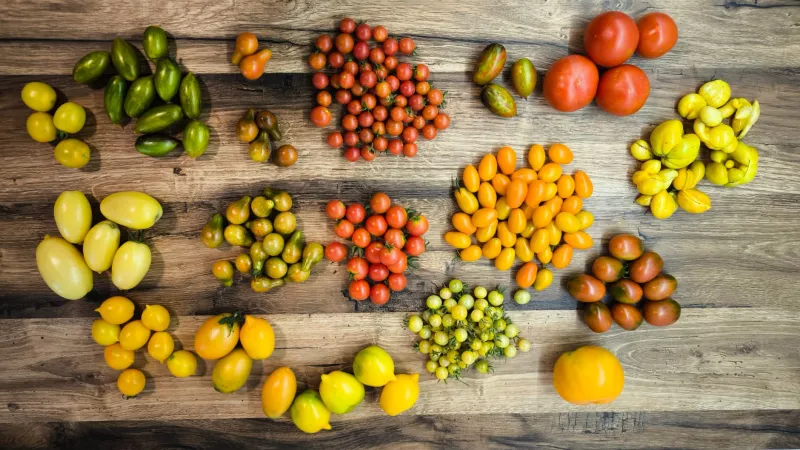
There's a story a lot of us tell ourselves at the farmers market. We spot the gnarly, deeply ridged tomato with the name that sounds like it belongs in a history book — Brandywine, German Johnson, Mortgage Lifter — and something in us relaxes. This is the real thing. The taste our grandparents knew. The flavor that got bred out of everything else.
Except it isn't. Not quite. And the farmers growing those tomatoes are often the first ones to admit it.
"People come up to me and say it tastes just like what their grandmother grew," says Dale Hutchins, a third-generation vegetable farmer outside Asheville, North Carolina, who has been growing heirloom varieties for nearly two decades. "And I want to believe them. But honestly? I think they're remembering something we haven't fully gotten back to yet."
That tension — between the genuine effort of heritage farming and the complicated truth of what's actually been lost — is one of the quieter conversations happening in sustainable agriculture right now.
The Seed Is Only Part of the Story
When most people think about recovering old-time flavor, they think about seeds. And seeds matter enormously. The consolidation of the commercial seed industry over the past fifty years wiped out thousands of regional vegetable varieties, and the work being done by seed libraries, small-scale seed savers, and organizations like the Seed Savers Exchange to recover what remains is genuinely important.
But seeds don't grow in a vacuum. They grow in soil. And that's where things get complicated.
Food historian and author Marcy Ellenbogen, who has spent years researching American agricultural foodways, puts it plainly: "The seed is the blueprint. But the soil is the construction crew. If the crew is depleted, the building doesn't come out right."
Decades of industrial farming — the tillage, the synthetic fertilizers, the herbicides — have fundamentally altered the microbial communities that once made regional soils so distinct. Those communities weren't just keeping plants alive. They were actively shaping flavor. The sulfur compounds that give an heirloom onion its particular bite, the sugars that concentrate in a dry-farmed melon, the complex acids in a paste tomato — all of it is negotiated, at least in part, between the plant's roots and billions of organisms living in healthy ground.
Rebuilding that takes time. A lot of it.
"I've been adding compost and cover cropping for twelve years," Hutchins says. "My soil is genuinely better than when I started. But is it what this land was like in 1940? I have no idea. Probably not."
Climate Shifted the Playing Field
There's another variable that doesn't get talked about enough in heritage food conversations: climate change has quietly rewritten the conditions under which these varieties evolved.
Many heirloom vegetables were developed and selected over generations in very specific regional climates — particular rainfall patterns, temperature swings, first and last frost dates. A tomato variety that thrived in the mid-Atlantic heat of the 1930s was shaped by summers that no longer exist in quite the same form. Warmer nights, more erratic precipitation, shifts in humidity — all of these affect how a plant expresses its genetics.
"We think of heirlooms as fixed things," says Ellenbogen. "But they were always in conversation with their environment. When the environment changes, the conversation changes too."
Some farmers are quietly adjusting — trialing the same variety across multiple microclimates, selecting seeds from the plants that performed best under current conditions. It's a form of ongoing adaptation that mimics what farmers did naturally for centuries, before seed-saving became a radical act rather than a basic agricultural practice.
But it also means the heirloom tomato you buy today is, in some measurable sense, a slightly different organism than the one your grandmother sliced onto a plate in July 1958.
What Was Lost Along With the Seeds
Seed-saving knowledge is another casualty that doesn't show up in the catalog descriptions.
For most of agricultural history, farmers didn't just save seeds — they made highly specific selections. They chose the tomato that ripened earliest, or the one from the plant that shrugged off that weird wet summer, or the fruit with the deepest color from the most productive vine. Over generations, those micro-selections accumulated into something real: a variety finely tuned to a specific farm, a specific family, a specific set of conditions.
When that chain of knowledge broke — and for most American farming families, it broke somewhere between the 1950s and the 1980s — what got lost wasn't just the seeds. It was the accumulated wisdom of how to keep selecting them forward.
"You can buy Brandywine seeds from a dozen different sources right now," says Hutchins. "But which Brandywine? Saved by whom, selected for what, grown where? It's not one thing. It never was."
This is part of why older farmers and food historians sometimes get quiet when the heritage food revival comes up. They're glad something is being preserved. They're less certain about what, exactly, that something is.
The Honest Version of a Good Thing
None of this is an argument against heirloom farming. It's an argument for being clear-eyed about what it is and what it isn't.
What it is: a genuinely meaningful rejection of industrial monoculture. A commitment to biodiversity. Often, a dramatically better eating experience than anything you'll find in a conventional grocery store. Real flavor, real variation, real food grown by people who care.
What it isn't: a time machine.
The flavor your grandmother knew was the product of a specific convergence — particular soil biology built up over generations, a stable regional climate, varieties selected by farmers who saved their own seeds every year and understood their land intimately. That convergence is gone, or at least seriously disrupted. The farmers working hardest right now are trying to rebuild it, piece by piece, with a lot of patience and not a lot of certainty about the outcome.
Hutchins frames it the way a lot of good farmers do — with honesty instead of marketing copy.
"What I can tell you is that what I'm growing is better than it was five years ago. And five years from now, it'll probably be better than this. I'm not selling nostalgia. I'm selling a direction."
That might be the most honest thing anyone at a farmers market has ever said. The real thing isn't fully back yet. But the people trying to bring it back are worth supporting — not because they've already arrived, but because the direction they're heading is the right one.
And that Cherokee Purple? It still tastes pretty damn good.