Counting Every Dollar: The Raw Financial Truth of Selling at Your Local Farmers Market
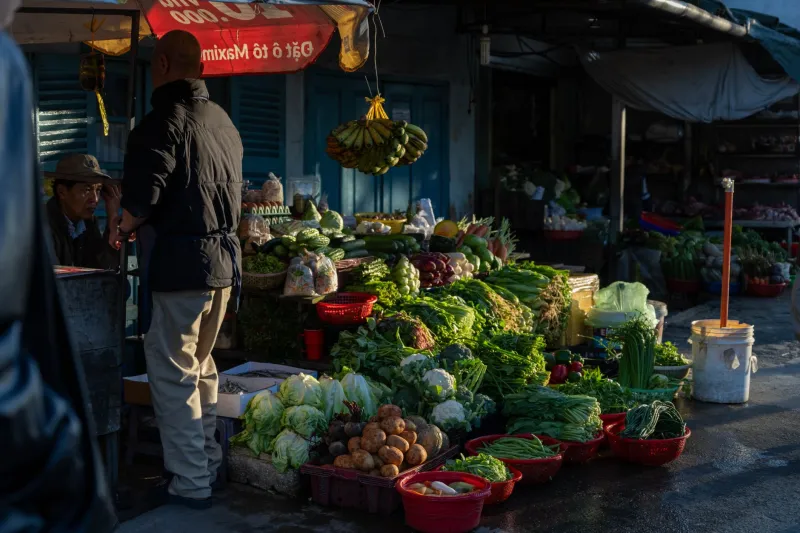
Saturday morning. The canopy goes up at 6 a.m. The hand-lettered signs get zip-tied to the front of the table. The coolers — heavy, packed the night before — get dragged out of the truck bed one by one. By the time the first customer wanders over with their reusable tote and a cup of coffee, the farmer standing behind that booth has already been working for hours. And in most cases, they've already spent money they haven't made back yet.
That's the part of the farmers market experience most shoppers never see.
The Cost of Showing Up
Let's start with something deceptively simple: getting there. For Maria Gutierrez, who runs a small vegetable operation outside Fresno, California, a single market day means a 90-minute round trip in a diesel truck loaded with produce. "Gas, wear on the vehicle, my time driving — none of that shows up on a price tag," she says. "People see $4 for a bunch of kale and think I'm making bank. They don't see the $60 I spent just getting here."
Booth fees are the other invisible line item. Depending on the market and the region, vendors can pay anywhere from $25 to over $200 per day for the right to set up. In competitive urban markets — think Portland, Austin, or Brooklyn — fees on the higher end are common, and many markets also take a small percentage of daily sales on top of that flat rate. For a farmer grossing $800 on a good Saturday, a $150 booth fee plus a 5% commission eats a meaningful chunk before a single overhead cost is counted.
Then there's the infrastructure: the tent, the weights, the tables, the display baskets, the signage, the card reader, the change float. None of it is free, and all of it wears out.
What a "Good Day" Actually Looks Like
Talk to enough market vendors and you start to hear a version of the same story. A good day feels great in the moment — cash in hand, coolers emptied, customers chatting you up — but when you sit down with a notebook that evening, the numbers get humbling fast.
Jordan Whitfield farms about 40 acres of mixed vegetables and herbs in central North Carolina. He's been selling at two regional markets for six years. "My best market day last season, I grossed just over $1,200," he says. "After booth fees, fuel, the part-time help I brought with me, and the produce I had to dump because it didn't sell, I netted maybe $550. That sounds okay until you remember it was a 14-hour day counting harvest and pack-out."
That math — long hours, high effort, moderate net return — is pretty standard. Industry observers and farm economists have noted for years that direct-to-consumer channels like farmers markets often deliver better per-unit prices than wholesale, but that premium comes with significant hidden labor costs that rarely get fully accounted for.
Why They Keep Coming Back
So why do farmers keep doing it? The answer isn't purely financial, and that's actually the point.
For one thing, the price premium is real, even if the margin math is complicated. Selling a dozen eggs at a farmers market for $7 beats selling them into a wholesale channel for $2.50. The same logic applies across almost every product category. Commodity markets crush small producers. Direct sales, even with all the associated costs, often represent the only path to something approaching a living wage from a small farm.
But there's something else going on, too. Something harder to put in a spreadsheet.
"My regulars are my business," says Deb Okonkwo, who sells pastured pork and chicken at a market outside Columbus, Ohio. "I've got customers who've been buying from me for four years. They text me if they want something specific. They refer their friends. That relationship is worth real money over time — I just can't show it on a single day's profit-and-loss."
Customer loyalty is the long game of farmers market economics. Vendors who stick it out past the first season or two often build a core base of repeat buyers who show up rain or shine, pre-order before market day, and become something close to community supporters rather than just consumers. That kind of loyalty is nearly impossible to cultivate through a grocery store intermediary.
The Wholesale Comparison
It's worth understanding what the alternative actually looks like. When a small farm sells into wholesale — to a restaurant, a grocery distributor, or a food hub — they typically receive 20 to 40 cents on the retail dollar. The logistics are handled by someone else, which saves time, but the price received rarely covers the true cost of production for a small operation running without economy-of-scale advantages.
Commodity markets are even more brutal. A farmer growing corn or soybeans at small scale is essentially price-taking — accepting whatever the market offers, with no ability to negotiate and no relationship with the end buyer. The consolidation of American agriculture over the past 50 years has made this increasingly untenable for anyone farming fewer than several hundred acres.
Farmers markets, CSA subscriptions, and farm stands represent a genuine structural alternative. They're not perfect, and they're not easy, but they give small producers something the commodity system never will: a direct line to the people eating their food.
What Shoppers Can Actually Do
Here's the thing about understanding these economics — it changes how you shop. Not in a guilt-trip way, but in a practical one.
Showing up early matters. The best selection is there at opening, and a full cooler at day's end is a loss for the farmer. Buying imperfect produce matters. That slightly crooked carrot tastes the same and costs the farmer just as much to grow. Paying in cash when you can matters — card processing fees are real and add up. And maybe most importantly, becoming a regular matters. Your familiar face and predictable purchase is worth more to a small vendor than you probably realize.
The farmers market isn't just a pleasant weekend outing. For the people behind those booths, it's often the difference between a farm that survives and one that doesn't. The least we can do is understand what it actually costs to get that food from the field to our hands — and shop accordingly.