Dirt Under Their Nails, Doubt in Their Pockets: The Untold Story of America's Farm Apprentices
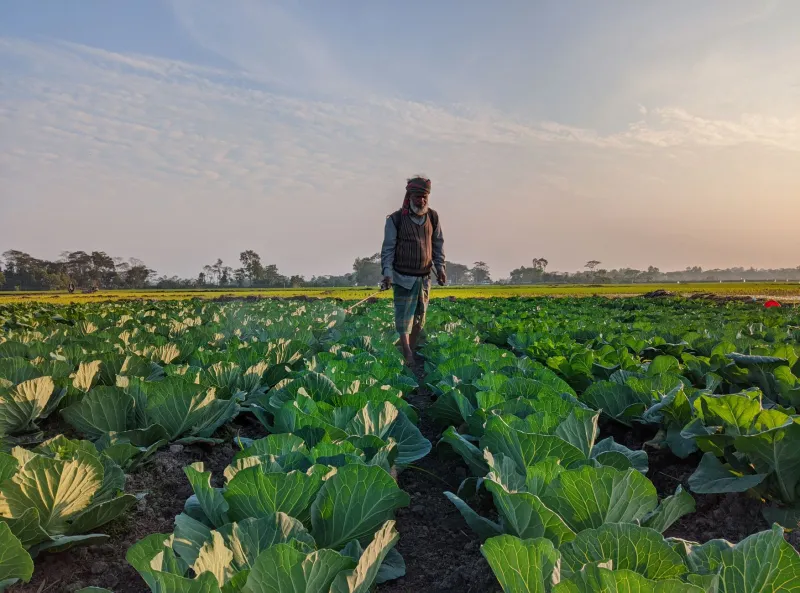
Somewhere in Vermont right now, a 24-year-old from suburban Ohio is hauling compost before sunrise. In central California, a first-generation college grad is learning to read soil like a language she was never taught in school. Outside Asheville, a former barista is wrestling with drip irrigation lines, sunburned and quietly wondering whether this was the right call.
They are farm apprentices and interns — a loosely defined, chronically underpaid, and largely invisible workforce quietly holding up a significant chunk of America's small-farm food system. And almost nobody is talking about them.
Why They Come
Ask a dozen farm apprentices why they showed up, and you'll get a dozen different answers. But certain threads run through almost all of them.
Maya, 26, spent two years working in marketing before she landed a spot at a 40-acre diversified vegetable operation in the Hudson Valley. "I kept buying food at the farmers market and feeling this weird guilt, like I was consuming something I had no real relationship with," she says. "I wanted to understand where it came from. Like, actually understand it."
For others, it's a more urgent kind of calling. Darius, 29, grew up in a food desert in Memphis and discovered sustainable agriculture through a community garden program in college. "I saw farming as a form of resistance," he explains. "Especially for Black communities that have been deliberately cut off from land ownership. I wanted to learn everything I could and bring it back."
Then there's the growing cohort of people who simply couldn't afford traditional agricultural education — land-grant university tuition has skyrocketed, and farm apprenticeships offer a hands-on alternative that doesn't require taking on six figures of debt.
Whatever the reason, the USDA estimates there are tens of thousands of beginning farmers entering the field each year, and a significant portion of them pass through some form of apprenticeship or internship before striking out on their own. These programs are, in many ways, the unofficial training pipeline for the next generation of American farmers.
The Math Doesn't Always Work
Here's where the story gets uncomfortable.
Many farm apprenticeships operate under a stipend model — meaning workers receive a modest weekly payment, often between $100 and $300, plus housing and sometimes meals. On paper, that sounds like a fair trade for education and experience. In practice, it can mean working 50 or 60-hour weeks for an effective hourly wage that falls well below federal minimum wage.
The legal framework is murky at best. Agricultural workers are explicitly excluded from many federal labor protections that cover other industries, a legacy of racist New Deal-era policy that was designed to exclude Black and Latino laborers from basic rights. That exclusion still shapes the landscape today, leaving apprentices in a legal gray zone that some farms — not all of them malicious, but some definitely opportunistic — quietly exploit.
"I loved the farm I was on, I really did," says Priya, who completed a year-long apprenticeship in New Mexico. "But by October I was completely broke. My stipend didn't cover my student loan payments, I had no health insurance, and I was too exhausted to pick up any side work. I had to borrow money from my parents just to get through the winter."
Housing is another pressure point. On-farm housing can be wonderful — or it can be a drafty converted barn with no heat and spotty Wi-Fi. The quality varies wildly, and apprentices rarely have much leverage to negotiate.
Farms Doing It Differently
To be clear: not every farm apprenticeship looks like this. Some operations are genuinely pioneering what a sustainable mentorship model can look like — and the difference is stark.
At Singing Frogs Farm in Sebastopol, California, owners Paul and Elizabeth Kaiser have long been vocal about the need to treat farm labor as skilled work deserving of skilled wages. Their apprentices receive competitive pay, structured learning curricula, and real mentorship — not just a list of tasks to complete.
"If we want farming to attract talented, committed people, we have to stop pretending that passion is a substitute for a paycheck," Paul has said publicly. It's a sentiment that's starting to gain traction in progressive agricultural circles, even if the broader industry hasn't caught up.
The National Young Farmers Coalition has been pushing for policy changes that would extend greater labor protections to agricultural workers and create federally supported pathways for beginning farmer training. Some states have started developing their own apprenticeship certification programs modeled on trade apprenticeships in construction or electrical work — complete with wage floors and structured hours.
These efforts matter because the farms that mentor well tend to produce the next wave of farmers who mentor well. It's a culture that compounds — in the best possible direction.
What Gets Learned That Can't Be Taught
For all the legitimate criticism of how apprenticeships are structured, the people who've been through them are rarely bitter about the experience itself. The knowledge transfer that happens on a working farm — the intuitive, embodied, season-specific wisdom — is genuinely irreplaceable.
"I learned more in eight months on that farm than I could have in four years of reading about farming," says Marcus, who is now running a two-acre market garden in rural Georgia. "I know how to read a plant that's stressed. I know what healthy soil smells like. I know how to fix a walk-in cooler at 11pm. Nobody teaches you that in a classroom."
That kind of knowledge is exactly what the food system needs more of, particularly as climate change scrambles growing seasons and industrial monocultures continue to degrade the land. Farmers who understand their ecosystems intimately — who've spent years paying close attention — are going to be essential to whatever more resilient food future we're building.
Which is exactly why it matters so much that we stop treating those farmers-in-training as cheap labor and start treating them as the investment they actually are.
The Stakes Are Bigger Than One Season
The average age of an American farmer is now 58 years old. The land is aging out faster than new stewards are stepping in, and the barriers to entry — cost of land, equipment, operating capital — have never been higher for young people without generational wealth or agricultural family connections.
Farm apprenticeships and internships, done right, are one of the few genuine on-ramps left. They're how knowledge passes from one generation to the next. They're how people without farming backgrounds get a foothold. They're how the food system renews itself.
But done wrong — underpaid, under-supported, extractive — they burn people out before they ever get started. They confirm every fear that farming is a beautiful idea that can't sustain a real life.
Maya, who started out hauling compost in the Hudson Valley, now manages 12 acres of vegetables on a farm she co-leases with two other former apprentices. She's thinking about taking on an apprentice of her own next season.
"I want to do it right," she says. "Pay them fairly. Actually teach them. Give them the kind of experience that makes them want to keep farming instead of making them want to run."
That's the whole thing, really. That's what we're either building or destroying, one growing season at a time.