Seeds of Resistance: The Ordinary People Saving Extraordinary Plants Before They Disappear Forever
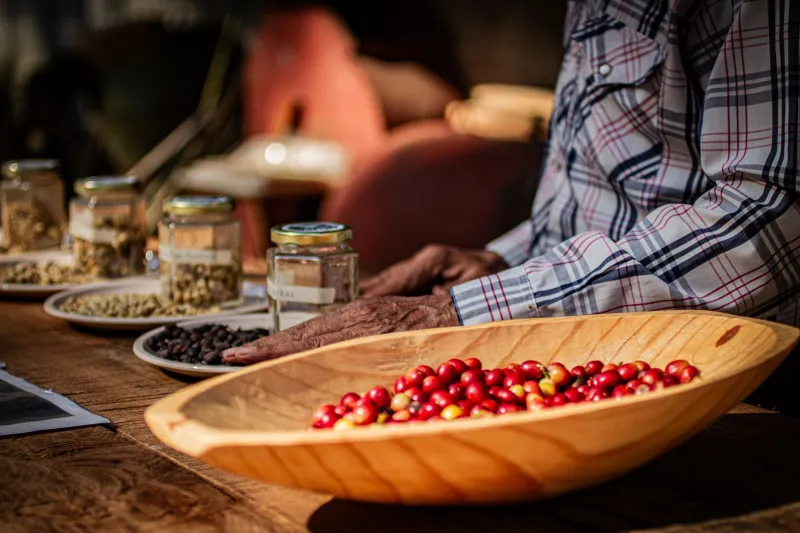
Somewhere in a root cellar in western North Carolina, an 81-year-old woman named Dottie keeps a wooden cigar box stuffed with paper seed packets. Each one is dated in pencil, labeled in her mother's handwriting, and contains the promise of something that technically doesn't exist anymore — at least not in any commercial catalog. There's a half-runner bean her family has grown since Reconstruction. A watermelon variety so sweet and thin-skinned it would never survive a cross-country truck ride. And a tomato — deep, almost purple-red — that her grandmother called "the bloody heart" and that no university extension office has ever been able to formally identify.
Dottie isn't a scientist. She's not affiliated with any nonprofit or land-grant university. She's just a woman who paid attention when her elders talked.
"My mother told me, you lose a seed, you lose a story," she says. "I took that seriously."
Across the United States, people like Dottie are doing something that sounds almost impossibly humble and is actually radically urgent: they're saving seeds.
The Quiet Crisis Nobody's Talking About
Here's a number worth sitting with: since the early 20th century, the United States has lost an estimated 90 to 94 percent of its fruit and vegetable varieties. That's not a typo. Thousands of distinct plant types — each one shaped by generations of farmers selecting for local climate, soil, pest resistance, flavor, and cultural meaning — have simply vanished from agricultural practice.
The culprit isn't a blight or a drought. It's consolidation. As industrial agriculture scaled up throughout the mid-20th century, seed production became centralized. Big agribusiness companies bought out smaller seed houses, discontinued "unprofitable" varieties, and optimized what remained for yield, uniformity, and shelf life. The tomato got tougher. The corn got taller. And an enormous amount of genetic diversity quietly walked out the back door.
The USDA's National Plant Germplasm System does preserve seeds — around 600,000 accessions, in fact — but storage in a federal facility and actual living cultivation are two very different things. Seeds need to be grown out, selected, and re-saved regularly to stay viable and adapted. The real preservation work, the kind that keeps varieties truly alive, is happening in backyards and on small farms.
What We're Actually Losing
Biodiversity in agriculture isn't just a feel-good concept — it's a survival strategy. Genetically diverse crops are more resilient to disease, more adaptable to climate shifts, and more likely to offer nutritional and flavor complexity that monocultures simply can't match.
Think about the Irish Potato Famine. A single variety, grown wall-to-wall across a nation, hit by a single pathogen. The result was catastrophic. Agricultural historians point to that event constantly, and yet here we are, with American corn production dominated by a handful of hybrid varieties and commercial tomato breeding narrowed to a few dozen types out of the thousands that once existed.
Heirloom varieties — those open-pollinated plants that have been passed down through generations and breed true from saved seed — represent a living archive of adaptation. A Cherokee Purple tomato carries within it centuries of selection by Indigenous farmers in the American Southeast. A Mortgage Lifter, bred by a West Virginia man named Radiator Charlie in the 1930s, tells the story of working-class ingenuity and community plant breeding. These aren't just plants. They're documents.
The People Doing the Work
The seed saving movement in America is decentralized by design, which is both its strength and its challenge. Organizations like Seed Savers Exchange in Decorah, Iowa, have built impressive networks and seed libraries. But the real backbone of heirloom preservation runs through informal regional networks — the kind held together by trust, shared knowledge, and annual seed swaps in church fellowship halls.
In the Appalachian South, groups like Sow True Seed and the Southern Exposure Seed Exchange have spent decades tracking down varieties held by farming families and working to reintroduce them to wider cultivation. In the Southwest, Native seed organizations like Native Seeds/SEARCH are preserving crop varieties specifically tied to Indigenous foodways of the desert — plants adapted to survive where conventional agriculture struggles to get a foothold.
Multi-generational farming families are often the last line of defense. Take families who've been growing the same field corn for six or seven generations in the same Ohio valley, selecting seed each year from the strongest stalks. That corn isn't just adapted to a general climate — it's adapted to that specific place, that specific soil chemistry, that specific pattern of late summer rain. You can't replicate that in a seed vault. You can only replicate it by growing it, year after year, in the ground.
Your Grandma's Garden Was Doing More Than You Realized
Here's the thing that often gets lost in conversations about biodiversity and food systems: this preservation work has historically been carried out by the people least likely to get academic credit for it. Women, especially. Grandmothers and great-aunts who saved seeds in old coffee cans. Immigrant families who tucked seeds into their luggage and grew them in new soil. Indigenous communities who maintained crop relationships across centuries of displacement and disruption.
The knowledge embedded in a family seed collection is staggering — which varieties bolt in hot weather, which ones do well in clay soil, how long to let a particular squash dry before saving its seeds, which plants cross-pollinate and need to be grown apart. This is sophisticated agricultural science, passed down not through journals but through practice and conversation.
When that chain of transmission breaks — when a family farm is sold, when an elder passes without passing on their seeds — something genuinely irreplaceable is lost.
How to Plug Into Your Local Seed Network
The good news is that the seed saving community is remarkably welcoming, and getting involved doesn't require a farm or even a large garden. Here's where to start:
Find your regional seed library. Many public libraries now host seed libraries where you can borrow seeds, grow them out, and return a portion of what you harvest. Search "seed library" plus your county or city name.
Attend a seed swap. These events happen all over the country, particularly in late winter and early spring. Local gardening clubs, farmers markets, and agricultural extension offices often organize them. They're usually free, and you'll walk away with both seeds and knowledge.
Connect with Seed Savers Exchange. Their online member network lists individual seed keepers across the country who offer rare varieties. It's one of the best ways to find something genuinely local and unusual.
Start small and save something. Even one variety — a favorite tomato, a bean your neighbor grows, a pepper from a farmers market vendor who saved his own seed — is a meaningful contribution. Learn the basics of seed saving for that crop and do it consistently.
Support farms that grow heirlooms. When you buy from local farmers growing open-pollinated, heirloom varieties, you're funding the continued cultivation of those plants. Ask your farmers market vendors what they're growing and where their seeds came from. That question alone starts a conversation worth having.
The Stakes Are Real
This isn't nostalgia. Or rather, it's not just nostalgia — though there's nothing wrong with honoring the past. Seed saving is a form of agricultural infrastructure, as essential as irrigation or soil health, and it's largely being maintained right now by volunteers and small-scale farmers operating with minimal resources.
As climate change reshapes growing conditions across the country, the genetic diversity preserved in heirloom varieties may turn out to be exactly what farmers need to adapt. A tomato that thrived in a hotter, drier Appalachian summer a hundred years ago might be precisely the variety a Virginia farmer needs in 2035.
Dottie's cigar box, it turns out, might be more valuable than anyone in a boardroom is currently willing to admit.
"People think I'm just a old lady with her jars," she says, and laughs. "But every spring, I put something in the ground that nobody else has. That feels like something."
It is something. It's everything, actually.