Grandma's Garden Was Right: The Lost Vegetables Making a Comeback on American Farms
Somewhere in a seed library in Decorah, Iowa, there's a tomato that hasn't been grown commercially since the Eisenhower administration. It's stubby, deeply ridged, and a color that marketing teams would describe as "aggressively ugly." It also, according to the farmers who've started growing it again, tastes like a tomato is supposed to taste.
That's the thing nobody tells you about the standardization of American food: we didn't just lose variety. We lost flavor. We lost resilience. We lost vegetables that had spent generations learning how to grow in specific soils, survive specific weather patterns, and feed specific communities. And now, quietly, in market gardens and small farm plots from Vermont to Oregon, farmers are going back to get them.
What We Actually Lost When Industrial Ag Won
The numbers are staggering when you look them up. The USDA estimates that the United States lost roughly 90 percent of its fruit and vegetable varieties between 1900 and 1980. That's not a slow fade — that's a collapse. Commercial agriculture needed crops that could survive long-haul shipping, ripen uniformly on a schedule, and look identical from one end of a pallet to the other. Flavor was never in the job description.
What got left behind wasn't random. The varieties that disappeared were often the ones most deeply adapted to specific places — a pole bean that thrived in the humid summers of the Carolinas, a winter squash that could handle the short growing seasons of Minnesota, a pepper developed over generations by farmers in the Rio Grande Valley. These weren't just different-looking vegetables. They were living records of agricultural knowledge, shaped by the land they grew in.
"Commercial breeding programs selected for everything except what you actually want from food," says one small farmer in central Pennsylvania who has spent the last eight years growing what he calls "regional antiques" — pre-industrial varieties documented in 19th-century agricultural records from his county. "They selected for shelf life. For uniformity. For how well something survives a truck ride. Nobody was asking whether it tasted good."
The People Doing the Digging
The revival isn't happening in universities or corporate research labs. It's happening in the kind of places you'd expect: small farms, community seed swaps, regional seed libraries, and the occasional family basement where somebody's grandmother kept her tomato seeds in a paper envelope labeled in pencil.
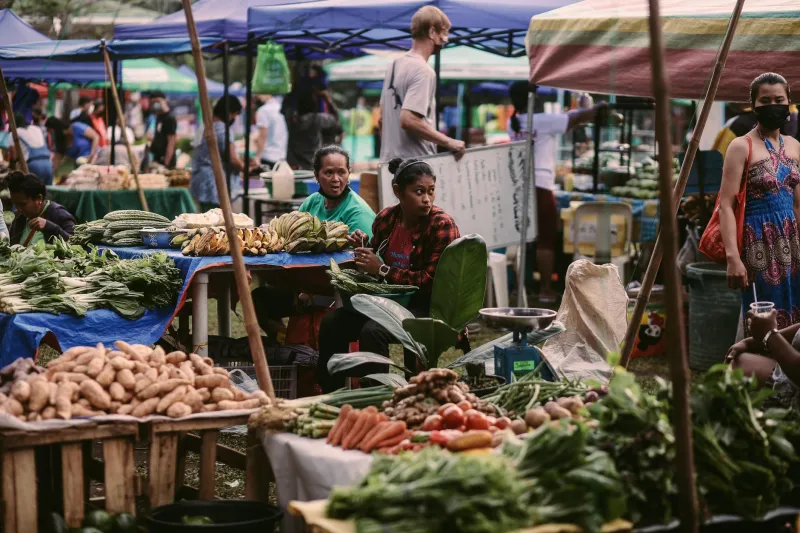
Farmers like Marta Okonkwo in southern Ohio have built entire market garden operations around recovered regional varieties. She grows eleven different sweet corn types — none of them available at any garden center — sourced from seed banks, Indigenous agricultural organizations, and other small farmers who've been quietly maintaining what the industry abandoned. Her customers at the Columbus-area farmers markets don't always know what they're buying, but they notice the difference immediately.
"People come back the second week and ask what I did differently," she says. "I didn't do anything differently. The corn is just better. It was bred to be better, over hundreds of years, by people who cared about flavor."
Out in the Pacific Northwest, farmer collectives are working with tribal agricultural programs to recover pre-colonial vegetable varieties that were displaced not just by industrial farming but by colonization itself. The Walla Walla sweet onion gets all the attention, but there are dozens of less-famous crops — bean varieties, root vegetables, leafy greens — that thrived in regional soils long before European settlers arrived and are now being grown again by farmers committed to both ecological and cultural restoration.
Why These Plants Taste Better Here
There's actual science behind the flavor difference, and it goes beyond nostalgia. Varieties that were selected and saved in a specific region over many generations develop what plant breeders call "local adaptation" — a genetic attunement to local soil chemistry, rainfall patterns, temperature swings, and even the specific populations of soil microbes present in regional farmland.
A tomato variety that spent a century being saved and replanted in the clay-heavy soils of western Tennessee develops differently than the same species grown in sandy Florida soil. The root structure changes. The uptake of minerals shifts. The way the plant responds to heat and humidity adjusts. And all of that shows up in flavor.
"Terroir isn't just a wine concept," explains one regenerative farmer in Vermont who has been collaborating with the Seed Savers Exchange to trial pre-industrial bean varieties in his specific microclimate. "Every vegetable has it. But you can only taste it if the variety was actually developed here. A commodity variety grown in your backyard still tastes like a commodity variety. Something that's been living in soils like yours for generations — that's a different conversation."
What Home Gardeners Can Actually Do
Here's the genuinely good news: a lot of these seeds are accessible. Not at your local big-box garden center, obviously, but through a growing network of regional seed libraries and small-batch seed companies that have made it their mission to keep these varieties in circulation.
The Seed Savers Exchange in Iowa is the most well-known, but regional operations like Fedco Seeds in Maine, Southern Exposure Seed Exchange in Virginia, and Native Seeds/SEARCH in Arizona maintain regionally-specific collections that are worth exploring based on where you live. Many state land-grant universities also maintain seed libraries focused on varieties historically grown in their states.
The trick, experienced growers say, is to start small and commit to saving seed. Regional varieties don't just grow better in your area — they get better in your area over time, as they re-adapt to your specific conditions with each successive generation of seeds you save and replant.
"Don't buy the seeds and treat them like a product," advises one Pennsylvania farmer. "Save them. Replant them. Share them with your neighbors. That's how these varieties survived in the first place — not because someone warehoused them, but because people kept growing them."
The Bigger Picture
There's something quietly radical about a farmer choosing to grow a vegetable that can't be shipped across the country, can't be grown at industrial scale, and doesn't look like anything your grocery store would stock. It's an argument, made in soil, that food should belong to the place where it grows.
The farmers bringing these varieties back aren't just preserving flavor. They're rebuilding a relationship between land and food that industrial agriculture spent decades systematically dismantling. And every time someone bites into a tomato that actually tastes like a tomato, that argument gets a little harder to ignore.