Fallow and Forgotten: The Idle Fields Sitting Right Outside Town While Your Food Bill Keeps Rising
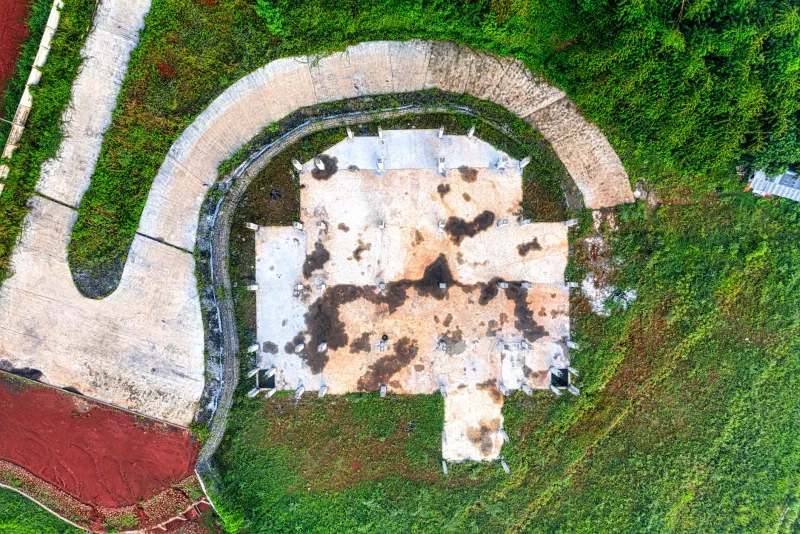
There's a field about six miles outside of Greenfield, Massachusetts that hasn't grown a cash crop in eleven years. The soil is good — deep, well-drained loam that the family farming it for three generations would have called some of the best ground in the county. The old irrigation lines are still there, mostly intact. So is the equipment shed, though the roof has started to go.
The family that owns it lives in Phoenix now. Their property taxes are low enough that holding the land costs almost nothing. Selling it to a developer would mean a big payout, but they're not ready to make that call. And leasing it to a new farmer? Nobody's ever really pushed on that door.
This story repeats itself on the outskirts of almost every mid-sized American city. Productive agricultural land sits idle or underused while food prices climb, new farmers hunt desperately for affordable acreage, and community food security quietly erodes. It's a problem hiding in plain sight.
The Scope of the Silence
The USDA's most recent Census of Agriculture found that the United States loses somewhere between 175,000 and 250,000 acres of farmland to development every single year. But the more complicated — and less discussed — problem isn't land being paved over. It's land that stays agricultural on paper while growing nothing useful in practice.
Some of that land is enrolled in federal conservation programs like the Conservation Reserve Program, which pays farmers to keep marginal land out of production to protect soil and water quality. That's a legitimate use. But a significant and harder-to-quantify portion is simply sitting idle because the economics of small-scale farming are brutal, landowners have complicated relationships with their property, and the infrastructure to connect willing growers with available land barely exists in most communities.
"There's land all around us," says Marcus Webb, who started a 15-acre diversified vegetable operation in central Virginia three years ago after spending four years looking for affordable ground. "But getting to it is like cracking a code nobody gave you the key to."
Why Good Land Goes Unused
The barriers keeping land fallow are rarely simple, and they stack on top of each other in ways that make the problem feel intractable.
Ownership fragmentation is a big one. As farm families age and property passes to the next generation — often siblings or cousins scattered across different states — decision-making becomes paralyzed. Nobody wants to sell. Nobody wants to manage it. And nobody wants to deal with the paperwork of a lease agreement when their share of any income would be modest anyway.
Property tax structures in many states inadvertently reward inaction. Agricultural land assessments are often so low — intentionally, as a policy to keep farming viable — that the annual carrying cost of doing nothing is negligible. There's no financial pressure to put the land to work.
Development speculation keeps other parcels locked up. Owners near expanding suburbs know their land may be worth substantially more in five or ten years if they hold out for a developer. Leasing to a farmer in the meantime can complicate that exit, particularly if the tenant establishes any kind of long-term presence or makes improvements.
And then there's the simple reality that small-scale farming is financially precarious. Even farmers who want to take on new land often can't afford the capital investment required to bring a neglected parcel into production — soil amendments, fencing, water access, equipment. The risk-reward calculation doesn't always pencil out.
The People Trying to Crack It Open
Across the country, a loose network of organizations and individual farmers is chipping away at this problem with varying degrees of success.
Farmlink, a national nonprofit, has brokered connections between landowners and beginning farmers since 2020, and has facilitated access to hundreds of thousands of acres. State-level farmland link programs — many run through land trusts or agricultural departments — do similar work at a regional scale.
In Vermont, the Intervale Center has spent decades turning degraded floodplain land in Burlington into productive farm plots leased to beginning growers, with shared infrastructure and technical support built into the model. It's not perfectly replicable everywhere, but it proves the concept works.
"The land is there," says Elena Castillo, who coordinates a farmland access program in the Central Valley of California. "What's missing is the connective tissue — the relationships, the legal templates, the technical assistance that makes a lease feel manageable for both sides."
Community land trusts are another model gaining traction, particularly in areas where development pressure is intense. By purchasing land and holding it in perpetual agricultural use, these organizations remove it from the speculative market entirely and make it available to farmers at below-market rates in perpetuity.
What Revival Actually Looks Like
When Marcus Webb finally found his land in Virginia, it had been in grass for eight years. The first season was almost entirely soil remediation — cover crops, compost, patience. He didn't turn a profit that year. Or the next.
"Bringing neglected land back takes time and money that most beginning farmers don't have," he says. "I was lucky. I had savings and a partner with an off-farm income. Most people starting out don't have that cushion."
His operation is now producing vegetables for two CSA shares, a local restaurant account, and a Saturday farmers market. The land is alive again. But he's clear-eyed about how close it came to not happening.
The Community Cost of Inaction
When productive land sits idle near population centers, the costs aren't just agricultural. Local food systems weaken. Beginning farmers get pushed farther from the markets they need to survive economically. Rural communities lose the economic activity and cultural identity that working farms provide.
And yes, food prices rise — not directly because of any single idle field, but because the aggregate loss of regional production capacity means more food traveling farther, through more intermediaries, before it reaches your table.
The fields sitting fallow outside your town aren't a mystery. They're a policy failure, a market failure, and a relationship failure all at once. And fixing them — slowly, parcel by parcel — is some of the most important agricultural work happening in America right now.