Sweet While It Lasts: The Real Reason Farm Stand Corn Ruins the Grocery Store Kind Forever
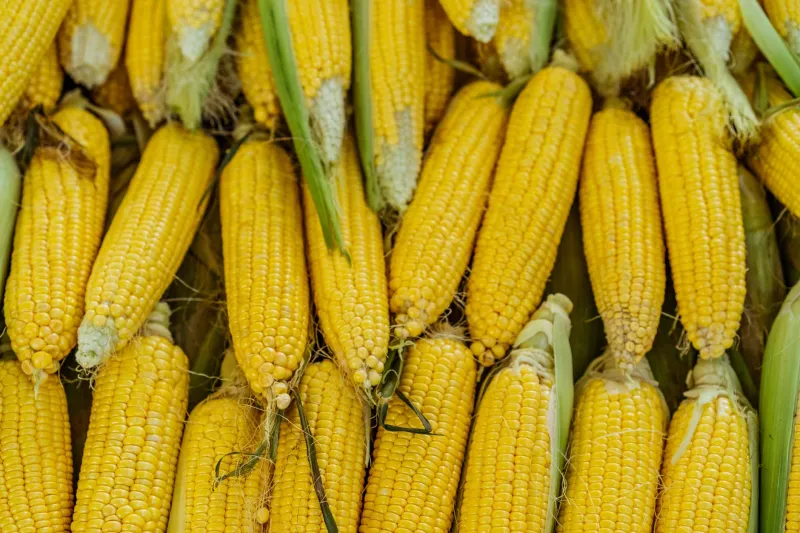
It happens to almost everyone who shops at a farmers market in July. You grab a few ears of corn from a local grower, shuck one on the drive home, and take a raw bite — just to see. And then you're done. You're ruined. The grocery store corn you've been eating your whole life suddenly tastes like a mouthful of wet cardboard by comparison.
This isn't nostalgia talking. It's biology, economics, and a century of agricultural decisions that most of us never think about when we're standing in the produce aisle.
Two Totally Different Plants
Here's the thing that surprises a lot of people: the corn at your farmers market and the corn at your grocery store are often not the same variety. Not even close.
Commercial corn growers — the ones supplying supermarket chains — need varieties that can be harvested mechanically, survive cold storage, endure days in a refrigerated truck, and still look presentable under fluorescent lighting a week later. That's a lot to ask of a vegetable, and plant breeders have spent decades engineering varieties that can handle it. The tradeoff? Sugar content and texture get sacrificed for shelf stability and structural durability.
Local farmers selling direct have an entirely different set of priorities. They don't need their corn to survive a cross-country haul. They need it to taste extraordinary today — because that's what keeps customers coming back to their table next Saturday.
"I grow Honey Select and Montauk for the market," says Dan Przybylski, who farms about 40 acres of mixed vegetables in central Michigan. "They're not going to last more than a day or two after harvest at peak sweetness. But when they're right, they're just right. People come back every week asking for them by name."
The Sugar Clock Is Always Running
Corn is one of the most time-sensitive vegetables you can grow. The moment an ear is picked, its natural sugars begin converting to starch. Old-school varieties — the kind your grandparents grew — could lose half their sweetness within 24 hours of harvest. Modern supersweet hybrids have slowed that clock considerably, but it's still ticking.
At a grocery store, that clock has often been running for three to seven days by the time you get to it. Even with cold-chain logistics doing everything right, you're eating corn that is measurably less sweet than it was at harvest. Some estimates from agricultural extension research suggest that corn stored at room temperature can lose up to 50 percent of its sugar content in just 24 hours. Refrigeration slows it down, but doesn't stop it.
Your farmers market grower, on the other hand, is often harvesting the morning of — or the evening before — market day. That's not a marketing line. It's just how direct-to-consumer sales work when you're a small operation.
"I'm out there at 5 a.m. on Saturday," says Keisha Monroe, who runs a vegetable farm outside Columbus, Ohio. "My corn is in the field at sunrise and on my table by 8. That's it. That's the whole difference."
Why Commercial Growers Can't Just Switch
It's worth being fair here: commercial corn growers aren't cutting corners out of laziness or indifference. The economics of large-scale agriculture make varietal choice a survival decision, not a flavor one.
When you're shipping thousands of cases of corn to distribution centers across multiple states, you need a product that arrives intact and sellable. Varieties with the highest sugar content and the most delicate texture simply don't make it through that system in any condition worth eating. The infrastructure of industrial food — the packing houses, the refrigerated trucks, the regional warehouses — was built around durability, not deliciousness.
Small farmers also can't necessarily grow every variety they'd like to. Seed availability, regional growing conditions, and the sheer labor involved in managing multiple plantings all shape what ends up at the market stand. But the key advantage they have is proximity. When your customer base is within 50 miles and you're selling face-to-face, you can optimize entirely for taste.
What You're Actually Tasting
When people describe farmers market corn as "sweeter" or "creamier" or just "more like corn," they're picking up on a few distinct things at once.
First, actual sugar content — the Brix level, if you want to get technical — is genuinely higher in freshly harvested, locally adapted varieties. Second, the texture of the kernels is different. Many commercial varieties are bred to have tougher skins that hold up to mechanical handling. Local varieties tend to be more tender, which reads as creaminess on the palate. Third, there's the matter of moisture. A fresh ear has a different water content than one that's been sitting in cold storage, and that affects everything from how it cooks to how it feels when you eat it raw.
"Corn has a smell when it's truly fresh," says Przybylski. "Like, a green, grassy sweetness. Once that's gone, something's gone with it."
What to Do With This Information
If you want the best corn of the season, the move is simple: find a local grower, ask when they harvest, and buy as close to that moment as you can. Eat it the same day if possible. Don't refrigerate it until you absolutely have to.
And if you're already a farmers market regular, do your grower a favor and ask about their varieties. Most of them are genuinely excited to talk about it — the seed catalogs they pored over in January, the trial rows they planted to test something new, the variety a neighboring farmer tipped them off about. That conversation is part of what you're buying when you shop direct.
The flavor difference is real. It's not marketing. And once you know why it exists, the plastic-wrapped ears at the supermarket start to look a lot less like corn and a lot more like a compromise nobody had to settle for.